Office Freylinger Recognized in the 2026 IP STARS Rankings

Office Freylinger Recognized in the 2026 IP STARS Rankings

Luxembourg, July 2026 — Office Freylinger is proud to announce its continued recognition in the Managing IP IP STARS 2026 rankings, reinforcing its reputation as a trusted European intellectual property firm serving clients worldwide.

This year’s recognition is particularly meaningful as Office Freylinger celebrates its 60th anniversary, marking six decades of supporting innovators, research organizations and businesses in protecting and developing their intellectual property assets.

The firm has once again been recognized as a Recommended Firm and has received the 10+ Years Ranked distinction, reflecting more than a decade of continuous recognition by IP STARS.

In addition, three of the firm’s patent professionals have been recognized individually:

These distinctions reflect Office Freylinger’s recognised expertise across a broad spectrum of technologies, from mechanical engineering and industrial processes to life sciences, digital technologies and artificial intelligence.

“Receiving this recognition during the year in which Office Freylinger celebrates its 60th anniversary is particularly rewarding. It reflects the trust our clients and international associates continue to place in us and recognizes the collective expertise of our entire team. Over the years, we have built a particularly strong practice in the iron-making and automotive industries, while continuing to expand our capabilities in materials science, medical technologies, and, increasingly, in software-implemented inventions and artificial intelligence, and space technologies. This diversity of technical expertise enables us to support innovation across virtually every sector of modern industry.”

Philippe Ocvirk, Partner, Office Freylinger

The annual IP STARS rankings identify the world’s leading intellectual property firms and practitioners across more than 80 jurisdictions. Based on extensive independent research and client feedback, the rankings are widely regarded as one of the most respected benchmarks of excellence in the intellectual property profession.

About Office Freylinger

Founded in 1966, Office Freylinger is an independent IP firm based in Luxembourg providing comprehensive services in patents, trademarks, designs, copyright, domain names and related IP matters. The firm’s multidisciplinary team combines legal, scientific and engineering expertise to advise clients across a wide range of industries. Through its international network and longstanding experience, Office Freylinger assists innovators and businesses in protecting, managing and enforcing their intellectual property rights worldwide.

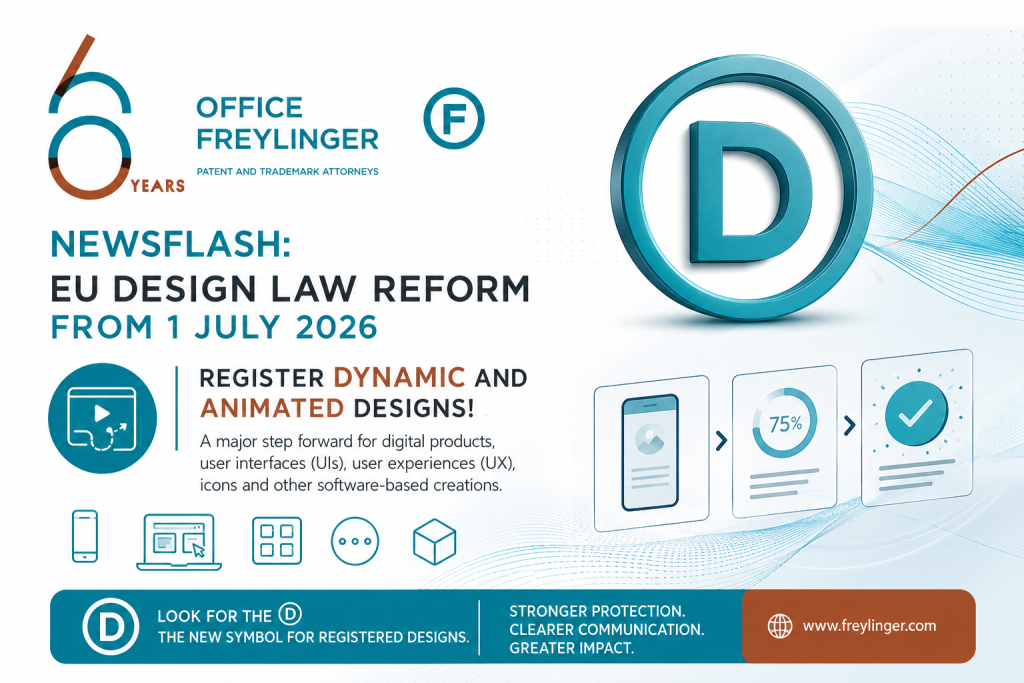
Groundbreaking Changes in European Design Law: Opportunities for Businesses from 1st July 2026 Ⓓ

Groundbreaking Changes in European Design Law: Opportunities for Businesses from 1st July 2026 Ⓓ

European design law is facing a comprehensive modernization. Given the rapid digital transformation and the necessity to adapt protection mechanisms to new technologies such as 3D printing and interactive user interfaces, the European Commission has adopted a comprehensive legislative package for the reform of design protection. This package includes the recast of the EU Design Directive (2020/612/EU) and the amendment of the EU Design Regulation (2020/613/EU).

While the amended Regulation, which governs the EU-wide Registered Community Designs (RCDs), enters into force directly, EU member states must transpose the new Directive into their national legislation. For the most significant innovations, particularly the more flexible representation formats for applications at the EUIPO, the regulation will only take effect on July 1, 2026.

This reform offers businesses the opportunity to more effectively protect their creative assets and strengthen their competitiveness in a constantly evolving market.

Design is much more than aesthetics; it is a decisive economic factor. A recent EUIPO survey clearly underscores this: Three out of four European consumers are willing to pay more for better-designed products. This demonstrates the direct added value that outstanding design can generate. Effective protection of these designs is therefore essential to secure this value and prevent imitation.

The upcoming reform significantly modernizes the system and adapts it to the realities of the digital economy.

Key Adjustments and their benefits for every business:

  1. Flexible Representation of Digital and Dynamic Designs (from July 1, 2026):
    • The reform allows for the registration of dynamic and animated designs. This is particularly relevant for digital products, user interfaces (UIs), user experiences (UX), icons, and other software-based creations.
    • Applicants will be able to use a broader range of file formats in the future, including 3D files (up to 20 MB per file) and videos (also up to 20 MB). This enables a more precise and comprehensive representation of designs with movement or transitions.
    • The previous limitation to seven views will be abolished, which better accommodates the complexity of modern designs, especially in the digital realm.
  2. More Efficient Application Processes (partially already in force, fully from July 1, 2026):
    • It will be possible to combine up to 50 designs in a single multiple application, even if they do not belong to the same Locarno class. This simplifies the application process and can reduce costs.
    • Communication with the EUIPO will in future exclusively take place electronically via the user account, leading to faster and more secure processing of applications.
  3. Expanded Scope of Protection and Increased Legal Certainty (partially already in force):
    • The reform strengthens protection against imitation, especially in the digital environment and in the field of 3D printing, by clarifying the protectability of digital elements.
    • The definition of “product” is being modernized, so that non-physical objects such as virtual spaces, graphical user interfaces, or lighting installations can now be explicitly protected.
    • Introduction of the “D in a circle” symbol: Similar to the “®” symbol for registered trademarks, a new symbol – a “D” enclosed in a circle (Ⓓ) – is being introduced for registered designs. This new visual indicator will allow businesses to clearly mark their registered designs, signaling to the public and potential infringers that the design is protected. This can significantly enhance enforcement efforts and reduce instances of unintentional infringement.

These comprehensive changes offer businesses a unique opportunity to optimize and adapt their design strategy. The ability to comprehensively protect digital innovations can provide a decisive competitive advantage in today’s fast-paced economy.

Would you like to learn more about how these innovations will affect your design protection strategy and how you can best secure your creative achievements? Office Freylinger’s trademark and design team would be happy to advise you on the new possibilities of European design law, both at the EU level and concerning adaptations in national law.

Please contact us to clarify your individual questions and ensure the best possible protection for your Ⓓ designs.

Lëtzebuerger Déiereschutzliga säit 1908 cannot be understood by German public

Lëtzebuerger Déiereschutzliga säit 1908 cannot be understood by German public

In an interesting and quite unusual case, Office Freylinger was able to defend the interests of the Luxembourg Animal Protection Association Lëtzebuerger Déiereschutzliga in Germany. We assisted our client in filing a German trademark application for the semi-figurative mark , which was first refused on absolute grounds by the German Patent and Trademark Office. The German Examiner considered that the German public would have no difficulty in understanding the meaning of the word element “Lëtzebuerger Déiereschutzliga”, due to the similarity of the Luxembourgish and German languages. In the Examiner’s opinion, the trademark applied for consists only of a circular seal print in a usual advertising format, which contains the generic name of a Luxembourg animal protection organization and the year it was founded. Due to the similarity to German, the German public would easily understand the meaning of the word part of the trademark – Luxembourg Animal Protection League – since 1908.

We contested the provisional refusal of the mark and argued that the Luxembourgish word “Déiere” will not immediately be understood by the German-speaking audience as “animals” and that the term “league” is commonly used in German in the context of sports competitions, but not in the sense of “association” or “organization”. Even the word “Lëtzebuerger” will only be understood by German speakers who live close to Luxembourg or have visited the country. Luxembourgish is only spoken in the Grand-Duchy and the border regions of Belgium and France and a German trademark using words of the Luxembourgish language can only be refused if the meaning of these foreign terms is obvious to the German public. The Examiner probably consulted online dictionaries and obtained a correct translation of the words forming the mark, but did not correctly analyze if a German consumer, who does not have access to these tools, would understand the meaning of the expression “Lëtzebuerger Déiereschutzliga säit 1908”. We also submitted that the identical mark had been accepted and registered by the Benelux Office although Luxembourgish is the national language of one of the Benelux countries.

After receipt of our arguments, it took the German Patent and Trademark Office only three days to revoke the provisional refusal and allow the mark for registration.

Trademarks using terms of the Luxembourgish language are common in Luxembourg, but are not often filed outside the Benelux territory and for this reason there is only little case law on the question whether such a mark is sufficiently distinctive if it contains descriptive terms. The case of “Lëtzebuerger Déireschutzliga” shows that it is not sufficient to correctly translate the meaning of the mark, but that it is also necessary to ask if the public will be able to understand this meaning. If this is not the case, there is no reason why Luxembourgish marks cannot be registered in Germany, France or other countries.

Office Freylinger’s trademark team would be happy to assist you in obtaining protection of your trademarks containing Luxembourgish words.

Martin Gutwillinger – European trademark and design attorney

2026 ECTA Annual Conference in Dublin

2026 ECTA Annual Conference in Dublin

Martin Gutwillinger will be attending the 2026 ECTA 44th Annual Conference in Dublin from June 16th to June 19th 2026

Martin is eagerly looking forward to reconnecting with colleagues and making new connections.

Office Freylinger is pleased to welcome Etienne Nederlof as Senior European patent attorney

Office Freylinger is pleased to welcome Etienne Nederlof as Senior European patent attorney

Office Freylinger is pleased to welcome Etienne Nederlof, who joined our Patent Department in May as Senior European Patent Attorney.

Etienne brings more than 25 years of experience in intellectual property. After starting his career in private practice, he spent nearly two decades as an in-house patent attorney in a multinational energy and petrochemicals company, advising on the protection, management and strategic use of intellectual property in an international business environment.

As European Patent Attorney, Dutch Patent Attorney and UPC Representative, Etienne combines extensive practical experience with a multidisciplinary academic background, holding Master’s degrees in Chemistry, Law, and Business Administration & Management.

His arrival further strengthens Office Freylinger’s patent practice and our ability to support clients in the development, protection and enforcement of their intellectual property rights throughout Europe and beyond. As part of the ongoing transition within our Patent Department, Etienne is progressively taking over a number of client matters and responsibilities, ensuring continuity of service and a seamless transfer of knowledge.

We are delighted to have Etienne on board and look forward to the expertise and perspective he brings to our team and our clients.

For more information about Etienne, please visit his profile page.

A Unitary Patent must cover all participating Member States

A Unitary Patent must cover all participating Member States

UPC Court of Appeal: Papst Licensing GmbH & Co. KG v EPO – CoA_8/2026, 9 February 2026

Since the inception of the Unitary Patent system, it was generally accepted that a European patent could benefit from unitary effect only if it covered all participating Member States at the time of registration. In particular, European patents not designating Malta were considered ineligible for unitary protection.

This interpretation has now been expressly confirmed by the Court of Appeal of the Unified Patent Court in Papst Licensing GmbH & Co. KG v. EPO (UPC_CoA_8/2026, decision of 9 February 2026).

The case concerned a European patent resulting from an application filed before Malta’s accession to the EPC in 2007. Since Malta could not be designated on the filing date, the granted patent did not cover that territory. The proprietor nevertheless requested unitary effect, arguing that the patent should be able to benefit from such protection for the other participating Member States. Before the UPC, Papst Licensing argued that the expression “granted for all the participating Member States with the same set of claims”, in Article 3(1) of Regulation 1257/2012, should be understood as referring to “all participating Member States which could be designated for that European patent …”, and that States which could not be designated should not, in this respect, be regarded as participating Member States. In practice, Papst Licensing was therefore seeking unitary effect while excluding Malta — a territorial “carve-out”.

The Court of Appeal rejected this argument and confirmed a strict reading of Article 3(1) of Regulation 1257/2012. It noted in particular:

“It is apparent already from the wording of Article 3(1) of Regulation 1257/2012 that a European patent can only benefit from unitary effect if it is granted with the same set of claims in respect of all the participating Member States.”

The Court therefore concluded that:

“Article 3(1) of Regulation 1257/2012 cannot be interpreted to allow registration of unitary effect for a granted European patent which does not include the designation of one of the participating Member States”

In practice, however, this situation should concern only a limited number of patents. It essentially concerns certain older patent families originating from applications filed before Malta’s accession to the EPC on 1 March 2007. For such patents, access to the Unitary Patent is now clearly excluded.

Philippe OCVIRK, European Patent Attorney, UPC Representative

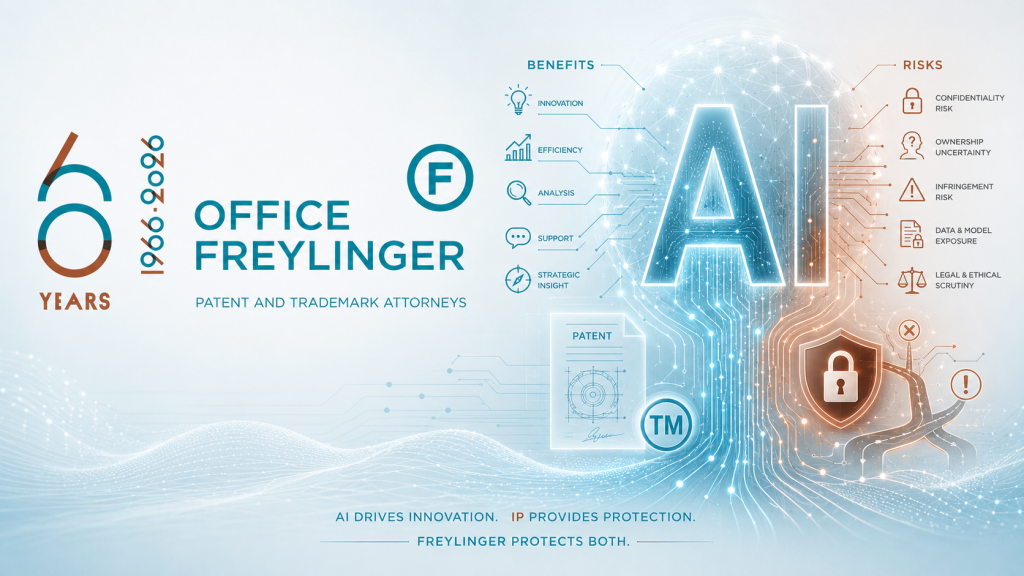
Artificial Intelligence and Intellectual Property: Continuity, Transformation and Protection Challenges 

Artificial Intelligence and Intellectual Property: Continuity, Transformation and Protection Challenges 

Introduction 

Over the past sixty years, technological progress has profoundly transformed both the subject matter and the practice of intellectual property. From industrial innovations to advances in life sciences and digital technologies, each wave of innovation has raised new questions regarding protection and required existing legal frameworks to evolve, while preserving the fundamental principles at the core of IP law. 

Artificial intelligence is part of this ongoing evolution, while introducing challenges of its own. Through its rapid development and wide range of applications, AI has become an essential technology for businesses, offering significant opportunities in terms of efficiency, innovation and decision support, while also creating new uncertainties relating to rights, confidentiality and control over information. 

These developments directly affect intellectual property, a strategic asset for companies but one whose interaction with AI remains insufficiently understood in many cases. They also raise important questions for the practice of intellectual property professionals such as Patent and trademark attorneys and IP lawyers), whose role is precisely to analyze technical innovations and design appropriate protection strategies in constantly evolving technological environments. 

This article examines: 

  • the integration of AI into everyday business activities and the legal issues it raises; 
  • its impact on the profession of intellectual property consultants; 
  • and the challenges associated with protecting AI-related technologies. 

1. AI in Everyday Use: Rights, Confidentiality and Control of Information 

Generative AI is now widely used for content creation, assistance with numerous tasks and technical development activities. Rapidly adopted by businesses, its use raises significant legal risks, particularly in relation to intellectual property and information management. 

In this context, a structured governance approach is essential. This includes implementing internal policies and appropriate training programs to raise awareness of: 

  • the opportunities and limitations of AI tools; 
  • the risks associated with the use of confidential information; 
  • and the importance of respecting third-party rights. 

Such measures help ensure that AI is used responsibly, balancing its operational benefits with applicable legal requirements. 

Risks Relating to Confidentiality and Trade Secrets 

The use of AI tools requires the input of data, which may include sensitive information. Depending on the terms of use, this information may be stored, reused or exploited for model training purposes. 

This creates a risk of loss of confidentiality, particularly with regard to trade secrets. In the field of industrial property, such disclosure may also jeopardize the patentability of an invention, especially where novelty requirements are concerned. 

Particular attention should therefore be paid to the contractual terms, technical implementation and security features of the tools being used, as well as to the nature of the information provided to them. 

Risks of Infringing Intellectual Property Rights 

AI systems are typically trained on vast quantities of data, including content protected by intellectual property rights. This raises questions regarding the lawfulness of training data, the operation of the models themselves and the legal status of generated outputs. 

In certain circumstances, AI-generated outputs may reproduce or imitate protected elements, exposing users to potential infringement risks, particularly in relation to copyright and trademarks. 

A specific issue also arises with AI-generated software. Generated code may unknowingly incorporate elements governed by open-source licenses. Such licenses can impose restrictive obligations, including disclosure requirements or attribution obligations, which may conflict with a company’s intended protection or commercialization strategy. 

Uncertainties Surrounding AI-Generated Content 

Beyond infringement concerns, AI also raises questions regarding the nature and legal status of generated content. 

On the one hand, outputs may be inaccurate, inconsistent or unsuitable for their intended purpose. Given the complexity of these models, it remains difficult to predict their behavior reliably across all situations. 

On the other hand, ownership and protection of AI-generated content remain uncertain. In many jurisdictions, particularly in Europe, copyright protection is based on the existence of human authorship. As a result, content generated autonomously by AI may not qualify for protection, or its legal treatment may depend heavily on the degree of human involvement. 

Furthermore, the contractual terms governing AI tools often contain specific provisions regarding the use and exploitation of generated outputs, adding another layer of complexity. 

These uncertainties call for a cautious approach, especially when AI-generated content plays a strategic role within a business. 

2. The Impact on the Intellectual Property Profession 

AI directly affects intellectual property professionals, particularly through the emergence of generative tools that are especially effective in producing written content. 

Emerging Uses: Between Automation and Assistance 

At present, the most realistic applications of AI in professional practice do not involve full automation but rather targeted assistance. AI is particularly useful for automating repetitive tasks such as formatting, document structuring and data management, for developing internal tools and agents, and for supporting drafting and analytical work. 

Professional AI solutions nevertheless share a fundamental limitation: generative models are probabilistic by nature. They produce plausible outputs, but without any guarantee of accuracy. Unlike deterministic tools, they can generate inconsistencies, errors or even hallucinations. Their use without critical review may therefore create significant legal risks. 

As with businesses generally, the use of these tools also raises ongoing confidentiality concerns, depending on their architecture and terms of use. 

Moreover, the growing reliance on “one-click” solutions may weaken professional engagement. The rapid generation of polished text can encourage superficial validation at the expense of strategic thinking and careful analysis. 

In practice, these tools often produce content that is statistically plausible but strategically average: patent applications that may appear satisfactory at first glance but lack the differentiation and optimisation required for robust protection. 

For these reasons, AI cannot be regarded as a reliable tool in the same way as a calculator. It requires critical oversight and careful use by IP practitioners. 

Strengthening the Quality and Consistency of IP Analysis 

Despite these limitations, the integration of AI into professional practice appears inevitable. When used appropriately, it can be a valuable tool for: 

  • facilitating document review and synthesis; 
  • strengthening the quality and consistency of patent drafting and other written work; 
  • testing alternative wording or legal arguments; 
  • and challenging an analysis through simulated objections. 

In our view, this is the most appropriate approach today: using AI as a tool for reflection and discussion rather than as a substitute for professional judgement. 

AI can provide a form of “map” of possible solutions by identifying alternative formulations or analytical approaches. However, it cannot: 

  • fully understand a client’s context; 
  • assess economic, commercial or litigation-related constraints; 
  • or assume responsibility for strategic decisions. 

These remain matters of professional expertise. The intellectual property consultant remains the only person capable of determining the most appropriate protection strategy. 

Ultimately, the principle remains simple: AI assists, humans decide. 

3. Protecting AI Through Patents 

The rise of AI has also led to a significant increase in patent filings, particularly before the European Patent Office (EPO). 

From the EPO’s perspective, AI-related inventions are generally treated as computer-implemented inventions

As such, they remain subject to the established principles of the European Patent Convention, notably: 

  • the exclusion of mathematical methods and computer programs “as such”; 
  • and the requirement that an invention possess technical character in order to be patentable. 

This approach is firmly rooted in established case law, particularly the COMVIK decision (T 641/00), according to which only features contributing to technical character can support inventive step. 

Contrary to a common misconception, AI does not constitute a separate legal category. It falls within a legal framework that has long existed for software-related inventions. 

Identifying a Technical Effect 

The particularity of AI lies in its underlying nature: it is based on mathematical models and algorithms, which are in principle excluded from patentability as such. 

The central issue is therefore the transition from the abstract to the technical

To be patentable, an AI-related invention must demonstrate either: 

  • a technical effect resulting from its application (for example image processing, signal detection or the control of a technical system); 
  • or a technical contribution linked to its implementation (for example resource optimisation or improved operation of a computer system). 

The EPO therefore accepts the patentability of many AI-based applications when they are integrated into a technical context. For example, the use of a neural network to detect anomalies in medical data or to process signals will typically be regarded as providing a technical contribution. 

By contrast, AI used solely for abstract purposes, such as purely conceptual classification or data processing without a technical purpose, will generally remain excluded. 

Although the distinction is conceptually well established, its practical application is often complex and requires careful drafting and a rigorous demonstration of the technical effect achieved. 

Increased Requirements for Drafting and Protection Strategy 

The specific characteristics of AI require particular care when preparing patent applications. It is often necessary to: 

  • clearly define the technical problem being solved; 
  • explicitly describe the technical effects achieved; 
  • and, where relevant, characterize aspects of the model or training data that contribute to those technical effects. 

At the same time, the complexity and sometimes opaque nature of AI systems can make it difficult to strike the right balance between sufficient disclosure and the preservation of a competitive advantage. 

Protecting AI-related innovations through patents therefore requires a careful analysis of the technical effects actually achieved — a task that lies at the heart of the patent practitioner’s expertise. 

Conclusion 

Artificial intelligence has become an essential technology, rapidly adopted by businesses and capable of generating significant opportunities. At the same time, it requires increased vigilance, both in its use and in the protection of the innovations it enables. 

For intellectual property professionals, AI represents neither a complete disruption nor merely another technological development. Rather, it forms part of a broader process of continuous adaptation to technological change, which has always been a defining characteristic of the profession. 

In this respect, current developments do not fundamentally redefine the profession; they reinforce its core requirements. Analysis, judgement and responsibility remain central to the role of the IP practitioner in an environment where tools evolve rapidly but protection challenges remain critical. 

As Office Freylinger celebrates its sixtieth anniversary, this continuity becomes particularly evident: supporting innovation, understanding its technical implications and securing appropriate protection for businesses, regardless of how technology evolves. 

Brands and Corporate Identity: More than a logo — an Asset worth protecting

Brands and Corporate Identity: More than a logo — an Asset worth protecting

A company’s trademarks are protected under industrial property law, a branch of intellectual property (IP), which encompasses rights relating to intangible creations.

Over the past sixty years, the economy has undergone profound transformation. Businesses have shifted from predominantly industrial models to systems increasingly driven by intangible assets. In this environment, intellectual property has gradually emerged as a central strategic lever — sometimes long before companies fully recognized its importance.

Even today, every company generates intellectual property, often without fully realizing its scope or economic value. Ideas, projects, concepts — but what can actually be protected and leveraged?

While an idea in itself cannot be protected, its tangible expression can. This includes technical products or processes derived from it, names and logos linked to a new product or service, product design, graphical user interfaces, technically oriented algorithms, and more.

In this article, we focus specifically on trademarks — one of the most visible, yet also most sensitive, pillars of a company’s identity.

Brands surround us every day

Whenever you see a logo in a shop, in advertising, or simply on the street, you instinctively associate that sign with a particular company — and with certain expectations regarding products or services.

What feels natural today is the result of gradual evolution. Several decades ago, a brand primarily served as a means of identification. Over time, it has become a true marker of trust in an environment where supply has expanded and diversified dramatically.

A logo, a name, visual elements — these allow a company to be recognized. But behind these familiar signs lies a deeper reality: the brand itself. It is not merely a graphic or marketing element — it embodies the company’s identity and represents one of its most valuable assets.

A Compass in a saturated world

Every day we are exposed to hundreds of logos, slogans and company names. Yet only a few leave a lasting imprint.

Take a simple example: two cafés located just a few meters apart. Why does a customer instinctively choose the one whose name feels familiar? Because it carries an associated experience, a perceived level of quality, a promise consistently fulfilled over time.

This guiding function has strengthened over the years. As markets have become global and digital, brands have evolved into essential cognitive shortcuts — helping us distinguish, trust and decide.

An intangible asset that has gained strategic importance

What makes a brand particularly valuable is its intangible nature. It has no physical form, yet its economic value is very real.

Sixty years ago, few companies placed trademarks at the heart of their asset strategy. Today, brands rank among the most highly valued corporate assets — sometimes far exceeding tangible assets in importance.

This reality now applies to businesses of all sizes. SMEs, startups and independent entrepreneurs alike understand that a brand crystallizes:

  • accumulated reputation,
  • customer trust,
  • marketing and commercial investment,
  • and the company’s own history.

A strong brand attracts, retains, facilitates partnerships and opens new markets. But like any strategic asset, it must be properly protected.

The risk of failing to protect a Brand: A recurring lesson

Experience shows that many businesses still make the same mistake: investing in a name, logo or visual identity without prior clearance searches or trademark registration.

This is not a new phenomenon. For decades, similar situations have repeated themselves — companies forced to rebrand after years of use, avoidable legal disputes, and sometimes irreversible reputational loss.

In today’s global and digital environment, these risks have intensified. An unprotected brand can be copied, challenged or misused far more quickly than in the past.

Clearance searches: An essential first step

Before filing a trademark application, it is crucial to verify that it does not conflict with prior rights. This process — known as a clearance or availability search — has become indispensable.

Although such searches already existed decades ago, their complexity has increased with market internationalization and the multiplication of registers. They now require thorough analysis of signs, classes of goods and services, and relevant territories.

This preliminary step helps avoid costly disputes and ensures that a brand strategy rests on solid foundations.

Registering a Trademark: A foundational act, then and now

Once availability has been confirmed, filing a trademark application is the cornerstone of legal protection. Registration grants the exclusive right to use the sign for the designated goods and services within the covered territory.

While this principle has remained unchanged for decades, the strategic stakes have evolved significantly. Effective protection today requires:

  • carefully defined territorial strategies,
  • anticipation of the company’s future development,
  • and active monitoring in an environment of increasingly frequent filings.

A trademark is no longer protected only for present operations, but to support long-term growth.

A Brand as memory and projection

Beyond its legal dimension, a brand is an identity marker. It carries the company’s history, its values, and its future ambitions.

Brands that endure are those that evolve without losing their essence. They adapt to new uses, markets and technologies while preserving a consistent identity core.

Thinking about a brand therefore means thinking about both legacy and projection.

Anticipating tomorrow’s challenges

The challenges ahead are numerous: accelerating innovation, deeper digitalization, artificial intelligence, the multiplication of channels and territories of use.

In this context, trademark protection must become increasingly strategic, proactive and adaptable. It can no longer be a one-time administrative step but must be embedded within a long-term vision.

The role of specialized guidance over time

Faced with these challenges, many companies choose to work with Patent and Trademark Attorneys. Their role is to secure the process, anticipate risks, and build a protection strategy aligned with market realities and corporate ambitions.

When it comes to trademarks, these are often lawyers specialised in IP law, whose support typically includes:

  • assessing the chances of successful registration, including clearance searches;
  • determining appropriate territories for protection;
  • drafting precise descriptions of goods and services;
  • and implementing monitoring systems to detect potential infringements.

When it comes to protecting technological innovations, specialized engineers with IP legal background intervene in prior art searches and patent drafting.

It is an investment that preserves a brand’s long-term value and helps avoid costly litigation.

Building a sustainable brand takes time

In a constantly evolving world, a brand remains an anchor. It connects a company to its customers, differentiates its products and embodies its vision.

But for it to fulfil this role over time, it must be carefully designed, protected and managed with foresight. Trademark protection is not a mere administrative formality — it is a strategic decision rooted in long-term thinking.

Without a brand, there is no strong identity.
Without protection, there is no continuity.
And without vision, there is no lasting brand.

WTR 1000 2026 rankings

WTR 1000 2026 rankings

We are proud to share that Office Freylinger has once again been recognized in the World Trademark Review #WTR1000 rankings confirming Office Freylinger as being “a trusted force in protecting and defending brands”.
As we celebrate our 60th anniversary, this recognition highlights the collective dedication of our entire team — past and present — whose expertise, collaboration, and passion continue to drive our success.  

This year, two of our senior Trademark Attorneys, Marie-Christine Simon and Martin Gutwillinger have been listed as “Recommended Individuals”, reflecting the firm’s enduring commitment to excellence in trademark law and client service.  

Our warmest thanks go to our clients for their trust and partnership, and to our exceptional colleagues for their commitment and teamwork. 
Together, we celebrate this milestone and look forward to many more years of innovation, collaboration, and shared success in protecting intellectual property worldwide.

SME Fund 2026 – Fonds PME – Profitez d’une subvention pour votre dépot de brevet ou de marque

SME Fund 2026 – Fonds PME – Profitez d’une subvention pour votre dépot de brevet ou de marque

Le Fonds PME de l’EUIPO est un programme de subventions de l’Union européenne qui rembourse aux petites et moyennes entreprises une partie des coûts liés à la l’obtention de droits de propriété industrielle.

Si votre demande est acceptée, vous recevez un ou des vouchers couvrant une partie des taxes officielles, voire de conseil.
Pour les marques et dessins ou modèles, l’aide peut atteindre 700 €.
Pour les brevets, l’aide peut atteindre 3500 €

Le Fonds PME ouvre le 2 février 2026.

Les fonds étant limités et attribués selon le principe du premier arrivé, premier servi, nous vous recommandons vivement de déposer votre demande de subvention dès l’ouverture du dispositif, afin d’éviter tout risque de ne plus pouvoir en bénéficier.

Qui peut demander le Fonds PME ?

La subvention est ouverte aux petites et moyennes entreprises qui :

  • sont établies au sein de l’Union européenne ;
  • emploient moins de 250 personnes ;
  • réalisent un chiffre d’affaires annuel inférieur à 50 millions d’euros.

Nous vous accompagnons dans votre demande

N’hésitez pas à nous contacter pour obtenir davantage d’informations sur les modalités pratiques de cette subvention. Comme les années précédentes, l’équipe d’Office Freylinger se fera un plaisir de vous accompagner dans cette démarche.

A noter également que les demandes de subvention doivent être introduites et acceptées AVANT de procéder aux dépôts.

Office Freylinger – 60 years of protected ideas, and moving forward.

Office Freylinger – 60 years of protected ideas, and moving forward.

Sixty years.
In the life of a company, this is never a trivial milestone. It speaks of longevity and consistency, of the ability to navigate changing eras and adapt to economic, technological and societal transformations. It also tells a deeply human story — one shaped by generations of women and men who have carried forward a vision, a craft and a shared culture.

In 2026, Office Freylinger celebrates its 60th anniversary.
Sixty years of commitment to intellectual property.
Sixty years of legal and strategic expertise.
Sixty years of adaptation, innovation and knowledge transmission.

This anniversary is more than a symbolic date. It marks the beginning of a year dedicated to celebration, reflection and projection — embodied through a series of thematic articles published throughout the year. Conceived as a guiding thread, this series connects our history, our professions and the challenges that lie ahead.

60 Years of Longevity: A Foundation of Trust

Founded in 1966, Office Freylinger has grown in a constantly evolving environment, shaped by profound changes in legal frameworks, technologies and market practices. Its continued presence today is first and foremost the result of sustained trust — from clients, partners and employees alike.

Such longevity is no coincidence.
It is rooted in strong values: rigor, independence, excellence and a deep sense of service.
It is also driven by a continuous ability to question established practices, adapt to change and anticipate emerging needs in the protection, valorisation and defence of intangible assets.

In a world where innovation accelerates and intellectual property has become a strategic lever, endurance itself is a proof of relevance.

Strong Local Roots, International Reach

Established in Luxembourg since its inception, Office Freylinger has developed within an ecosystem naturally open to the world. A crossroads country, multilingual and international by nature, Luxembourg has fostered a professional culture grounded in cross-border cooperation, market diversity and legal complexity.

This strong local anchoring has never been a limitation. On the contrary, it has become a strategic advantage — enabling the firm to support clients well beyond national borders, across Europe and internationally. Today, Office Freylinger acts as a trusted partner in the protection and valorisation of intellectual property assets worldwide, coordinating strategies, procedures and expertise on a global scale, while maintaining the proximity and high standards that define its identity.

60 Years of Expertise: A Deeply Embedded DNA

Intellectual property has been at the very core of Office Freylinger’s DNA for six decades. Trademarks, patents, designs, copyrights, litigation and international strategies: expertise has continuously expanded in response to growing complexity and the globalisation of markets.

Beyond legal fields, however, a true culture of expertise has taken shape — one built on:

  • technical and regulatory mastery,
  • a deep understanding of clients’ business challenges,
  • long-term support,
  • and the transmission of knowledge across generations of professionals.

These sixty years tell a story not only of continuity, but of constant learning.

An Anniversary Year Focused on Sharing

To mark this anniversary, we chose not to limit ourselves to a retrospective perspective. Throughout the year, we will publish a series of articles exploring key intellectual property themes, closely linked to our professions, our expertise and the transformations shaping our environment.

Each publication will connect:

  • the experience accumulated over the past 60 years,
  • today’s intellectual property challenges,
  • and future perspectives for companies, creators and innovators.

This series is designed to be both educational and strategic, while offering a forward-looking vision. It addresses our clients, partners and peers, as well as anyone seeking to better understand the central role intellectual property plays in the economy of tomorrow.

60 Years — and Already Looking Ahead

Celebrating sixty years is not an endpoint. It is a milestone.
The future of intellectual property is being shaped today, at the intersection of profound transformations: digitalisation, artificial intelligence, globalised markets, new innovation models, and growing challenges related to sustainability and sovereignty.

In this evolving landscape, Office Freylinger intends to continue fulfilling its role — as a strategic partner capable of supporting clients not only on technical and legal matters, but also through a holistic and forward-looking vision of their intangible assets.

The IP solutions of tomorrow are being built today. They require anticipation, agility, a deep understanding of emerging technologies and continuous dialogue with innovation stakeholders. This is the dynamic in which Office Freylinger is firmly engaged.

A Story That Continues

Through this anniversary year, we celebrate our past, affirm our present and prepare for the future. The specially designed 60th anniversary logo embodies this continuity — a bridge between heritage and projection, between accumulated expertise and that which we will continue to develop.

Sixty years after its foundation, Office Freylinger remains true to its core identity, while resolutely looking toward what comes next.

Welcome to the 60th anniversary year.
A year to celebrate, to share, and to imagine together the future of intellectual property.

Paperjam Brand Manager 2026

Paperjam Brand Manager 2026

Office Freylinger est partenaire du Paperjam Brand Manager 2026 – rencontrez notre équipe lors de la cérémonie de remise des prix ce 22 janvier 2026 à la « KUFA » à Esch/Alzette.

Ce prix récompense celles et ceux qui façonnent les marques avec intelligence, cohérence et vision — des qualités que cultive Office Freylinger depuis six décennies. 

Nous sommes curieux de connaître les gagnants de cette 3ème édition du Brand Manager et félicitons tous les nominés.